 Urban OasisMay 01, 20204 min read
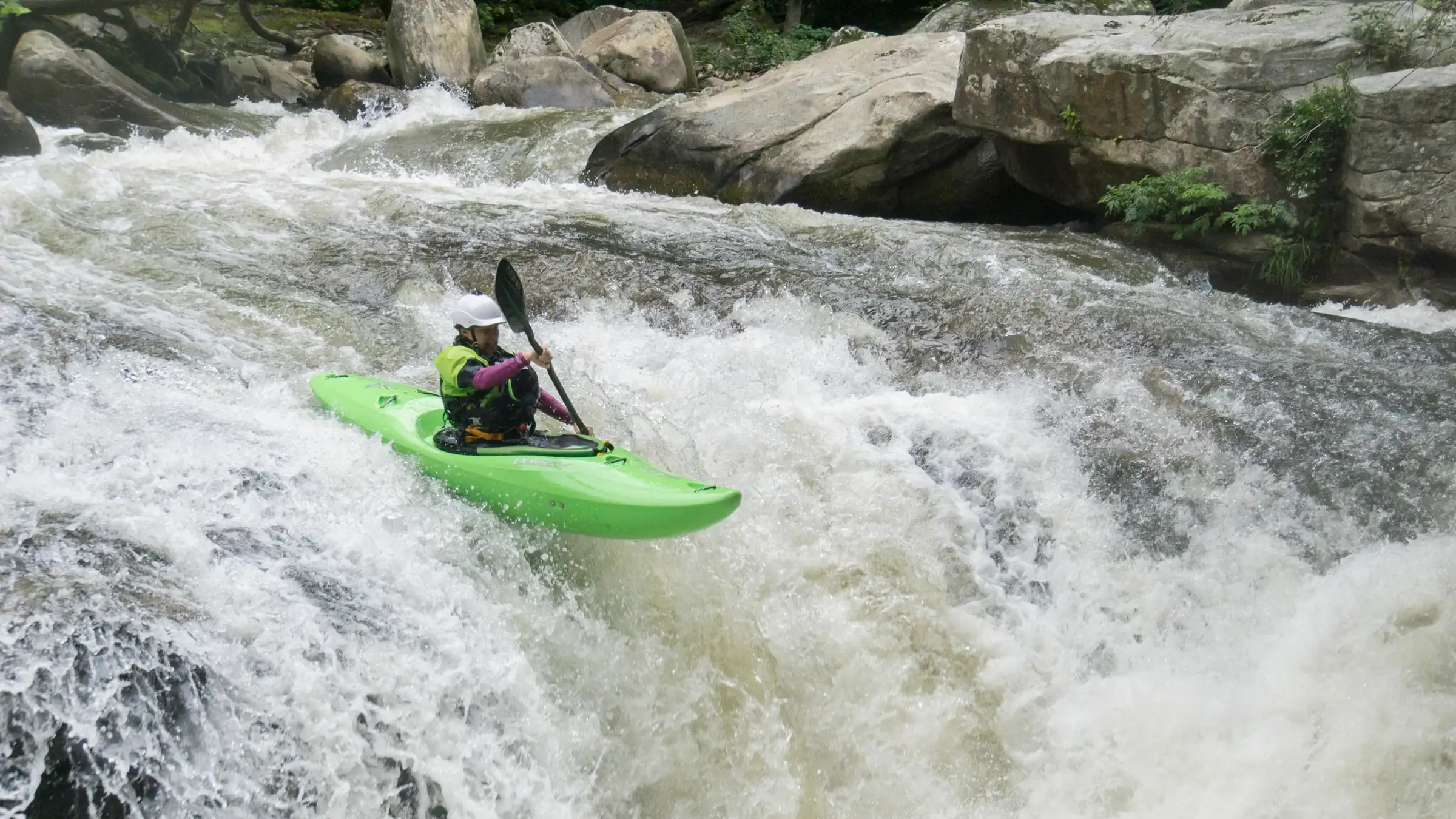
Anna Levesque says she has always battled with fear and self-doubt, even when she was standing on the podium during her competitive days.(Photo: Daniel Brasuell)
Anna Levesque is watching a lot ofStar Warsthese days. It’s not that the longtime pro kayaker is bored. Sure, most of the river put-ins are closed, effectively shutting down whitewater kayaking near her hometownofAsheville, North Carolina, but she has plenty to do. She can paddle against the current on a mellow waterway that’s still open to the public for a good strength workout. Shepractices yoga daily and runs a thriving coaching business. But there’s something about thoseStar Warsmovies that captures her attention.
“I love the idea of the Force and trying to find balance,” Levesque says. “And I think now, with everyone at home, is the perfect time for all of us to find that same kind of balance in our own lives.”
Levesque is a legend in thewhitewater-kayakingworld. Born in Ontario, she has been named to the Canadian national team five times and won a bronze medal in the World Championships in 2001. At 46, she still courts a host of sponsors and paddleswhitewater regularly. In recent years, she’s hosted a series ofretreatsin Barbados,Costa Rica, and the Blue Ridge Mountains and has published books and DVDs for would-be female kayakers. Her personal coachingblends whitewater with stand-up paddleboarding, yoga, and meditation, for a holistic approach to mental and physical wellness. “Whitewater is the perfect scenario to learn about yourself, because on a certain level, you have to let go of control andface your fears,” Levesque says. “That’s what I originally loved about kayaking—you have that exhilaration from being scared, but you have to act in spite of that fear. It’s a great way to cultivate courage, which is being afraid of something and doing it anyway.”
Levesque says she has always battled with fear and self-doubt, even when she was standing on the podium during her competitive days. She grew up skiing inOntarioand played traditional team sports, but she didn’t discover kayaking until she was a sophomore at the University of North Carolina at Chapel Hill.
“I was never superconfident, even when I was running really hard stuff at the peak of my career,” Levesque says. She picked upyogaand meditation to help calm her mind during competitions. “Our brains are designed to assess threats and dwell on the negative as a protective measure. The key is to not buy into those thoughts. That was my path as an athlete—to recognize and face that self-doubt. Now it’s my work to help other people find that courage.”
For Levesque, developing courage is an ongoing process that she continues to work through, whether it’s on the water or creating content for new paddlers. She says the first step is building a sense of self-awareness so you can recognize when negative thoughts start dictating how you react to a situation. This begins with taking stock of your physical imbalances, something that’s important for older athletes who can be plagued by injury and fatigue. And now,when our routines are disrupted, is an opportune time to do that.
“That was my path as an athlete—to recognize and face that self-doubt. Now it’s my work to help other people find that courage.”
“A lot of athletes are Type Apersonalities who are built to work hard toward a certain goal. But that sort of singular movement can lead to tunnel vision and injury,” Levesque says. “You have to be willing to open your mind to new movements and new ideas.”
Levesque still loves ClassIV rapids, and she often paddles North Carolinarivers like the Green and the North Fork of the French Broad. But she also mountain bikes, which helps work opposing muscles and joints, and she’s just as likely to hop on aSUPfor a yoga session as she is to bomb whitewater.
“There’s nothing like doing yoga on a paddleboard to make you aware of theimbalances in your body,” Levesque says. If you’re not on that level, she says, practicing aflow in your housecan also help, as long as you’re choosing the right kind. “Athletes are usually drawn to power yoga because it feels like a workout, but if you’re working hard in your chosen sport, find a practice that offers countermovements,” she says. For instance, kayakers typically have tight hips, shoulders, and chests, so they need to practice yoga thatopens the upper bodyand hips. Cyclists tend to have overworkedquadsand weak glutes, so their yoga practice should strengthen the posterior chain while stretching the front of the legs.
Levesque practicesyogaand meditation for more than an hour every morning, which she admits can feel overwhelming to athletes new to the practice. Yet she insists that anyone can do it. “Smallactions that you take consistently deliver compounding interest,” she says. “It’s better to do ten minutes of yoga four times a week than an hour of yoga once a week. And now is the time to begin that practice. I see an opportunity here. When there’s so much doubt and uncertainty in the world, being generous to yourself is important. Focusing on what you can control and letting go of what you can’t is important. You can’t control what happens to you, but you can control how you respond.”
We gather outdoor wellness stories from across the trail.