 Urban OasisMar 06, 20205 min read
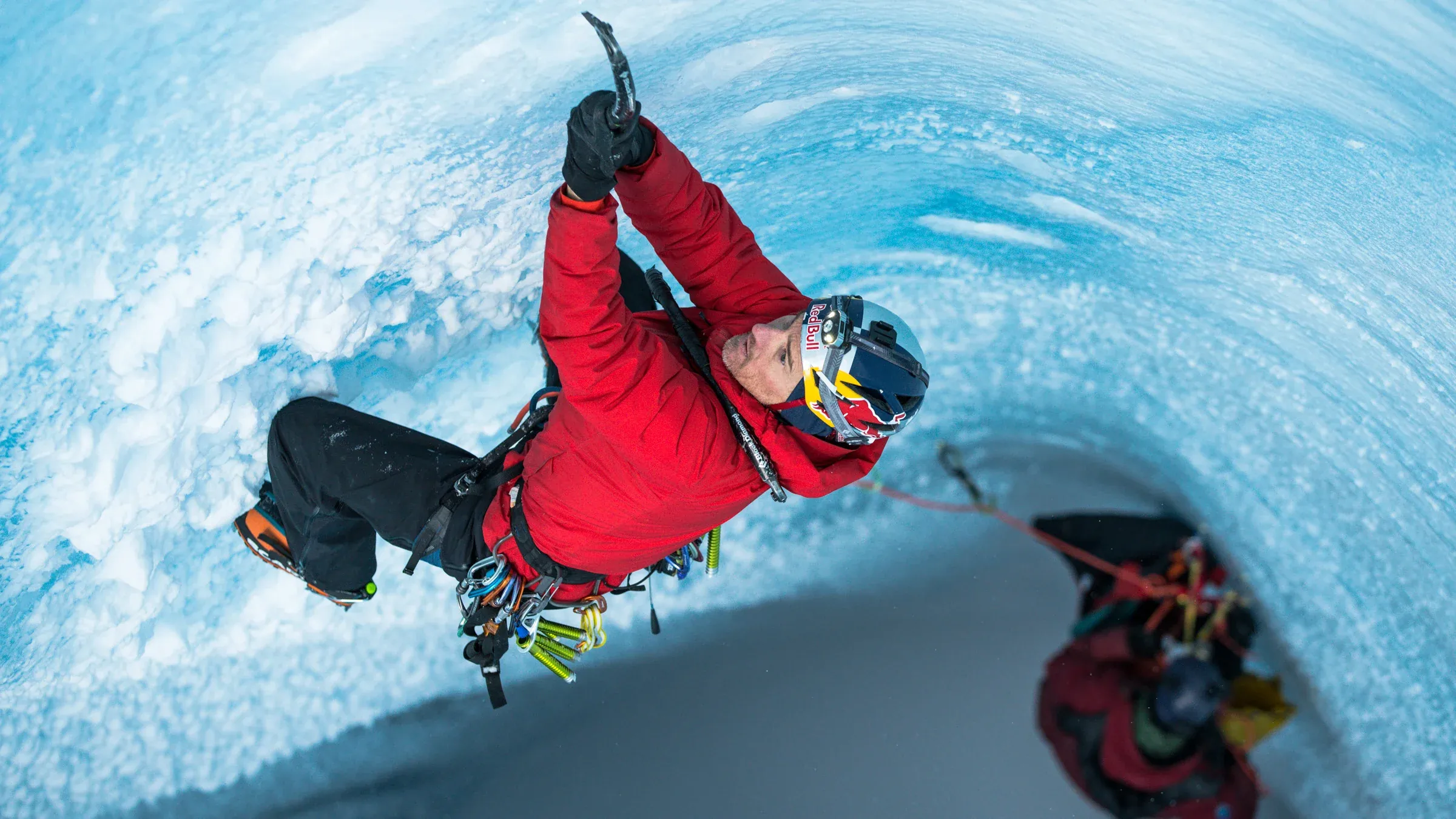
The 52-year-old travels all over the globe to send the tallest, gnarliest frozen lines.(Photo: Christian Pondella/Red Bull Cont)
Will Gadd is stoked to visit North Carolina. The 52-year-oldworld-class ice climbertravels all over the globe to send the tallest, gnarliest frozen lines imaginable—and sure, North Carolina is nottypically considered one of those destinations, but Gadd doesn’t care. When he learns I live in the state and dabble in iceclimbing, he thinks it would be fun to poke aroundPisgah National Forestand look for frozen waterfalls toscale. I just need to let him know when the temperature drops and he’ll head down from his home inCanada. Seriously.
Although Gadd is best known for his ice-climbing exploits—he bagged thefirst ascent of Niagara Fallsin 2015, climbed for24 hours straightat the Ouray Ice Fest in 2010, and topped the podium at the Ice Climbing World Cup in 2000 and at the X Games in 1999 and 1998—hebegan his globe-trotting ways as a professional kayaker. He’s also an accomplished paraglider and established the world record for the longest distance traveled while paragliding. Twice. If he’s not climbing ice, paddling, or flying, he’s mountain-biking, rock-climbing, or skiing. “I should probably specialize at some point, but the sports go together in strange ways that work well,” Gadd says. “I also live in a harsh, four-season climate, so it makes sense to be an ice climber and skier in the winter, a kayaker and mountain biker in the spring, and a paraglider in the summer. And there’s nothing better than rock climbing in the fall.”
In the past few years, Gadd has been using his diverse skill set for the greater good, leading scientists into dangerous locations that serve as ground zero for climate change, something he got into after witnessing the startling retreat of Alberta’sAthabasca Glacier, which is close to his home. In 2016, Gadd guided scientists deep into a cave inside the glacier, where they discovered previously unrecorded fungus-like biofilm thriving on the cave walls. “These holes in glaciers are a big unknown environment, and nobody really knows how they work,” Gadd says. “When I got a professor from the University of Alberta into that cave in Canada, he said the info we found was going to rewrite the textbook on glaciers.”
Last year he and another group of scientists explored the cavernous moulins (vertical shafts) ofGreenland’s ice sheet, hoping to learn more about how its melt will affect ocean levels. They discovered that its fissures, which look vertical from the surface, actually have broad horizontal rooms beneath the ice. “It felt good to be useful,” Gadd says. “Because of my caving and ice-climbing experience, I can help these scientists move around down there. It’s not like guiding—this is off-the-charts stuff. Helping these scientists access places they’ve never been, it’s so cool to be part of that.”
The uncharted nature of this work makes it more dangerous than your typical ice climb. Helping scientists assess the risk of any given scenario is a key part of Gadd’s job and one that he takes more seriously as he’s gotten older. “When I was younger, my idea of risk management was, ‘You go first,’” Gadd says. “But everyone evolves as they age in a sport. I was lucky to get a good education on how the mountains work and why. You have to listen to the environment rather than your head and ego. I’m more open to that now that I’m older.”
Gadd says he’s dropped certain sports from his portfolio, likeBASE jumping, because of the unnecessary risk involved. He’s also perfectly willing to pull the plug on an expedition when it takes an unexpected turn. Under the ice shelf in Greenland, for example, Gadd and a team of scientists were supposed to scuba-divein the meltwater beneath the ice. But after discovering the horizontal nature of the caves and the fragile condition of that ecosystem, Gadd cut the expedition short.
Guiding scientists into the icy depths of a glacial cave is physically demanding work, but Gadd says he feels stronger at 52 than he did at 25. On a certain level, Gadd’s lifestyle helps with this: he says that toggling from one sport to the next keeps his body balanced. But he doesn’t just rely on his time in the field to stay in shape—no matter what he’s doing, Gadd tries to movedaily. “I’ve been through every type of fitness activity, fromZumbatoCrossFitto Reebok Step back in the day,” Gadd says. Still, this goal can be difficult sometimes. “I travel a lot, and I have two kids, and I do documentary and guiding work outside of climbing,” he says. “I’ll hit the hotel gym if I have to. I’ve hiked parking-garage stairs in Germany. I do this weirdsemi-yoga mobility stuffin airports. People look at me funny, but I don’t care. I’m gonna do my thing, because I have to.” Gadd also follows a strict strength-training program that has him in the gym regularly performing a few basic movements (pushing, pulling,deadlifts, andsquats), adding enough tension to build power and maintain functional strength.
Even with a list of accomplishments behind him,Gadd is obsessed with training his weaknesses. “I could just go to the climbing gym and do what I’m good at all the time, but there’s no point in that,” he says. “I like the idea of failing while you’re training. That’s where I learn things about myself and the sports I do.”
We gather outdoor wellness stories from across the trail.